1. The Cityscape and Growth
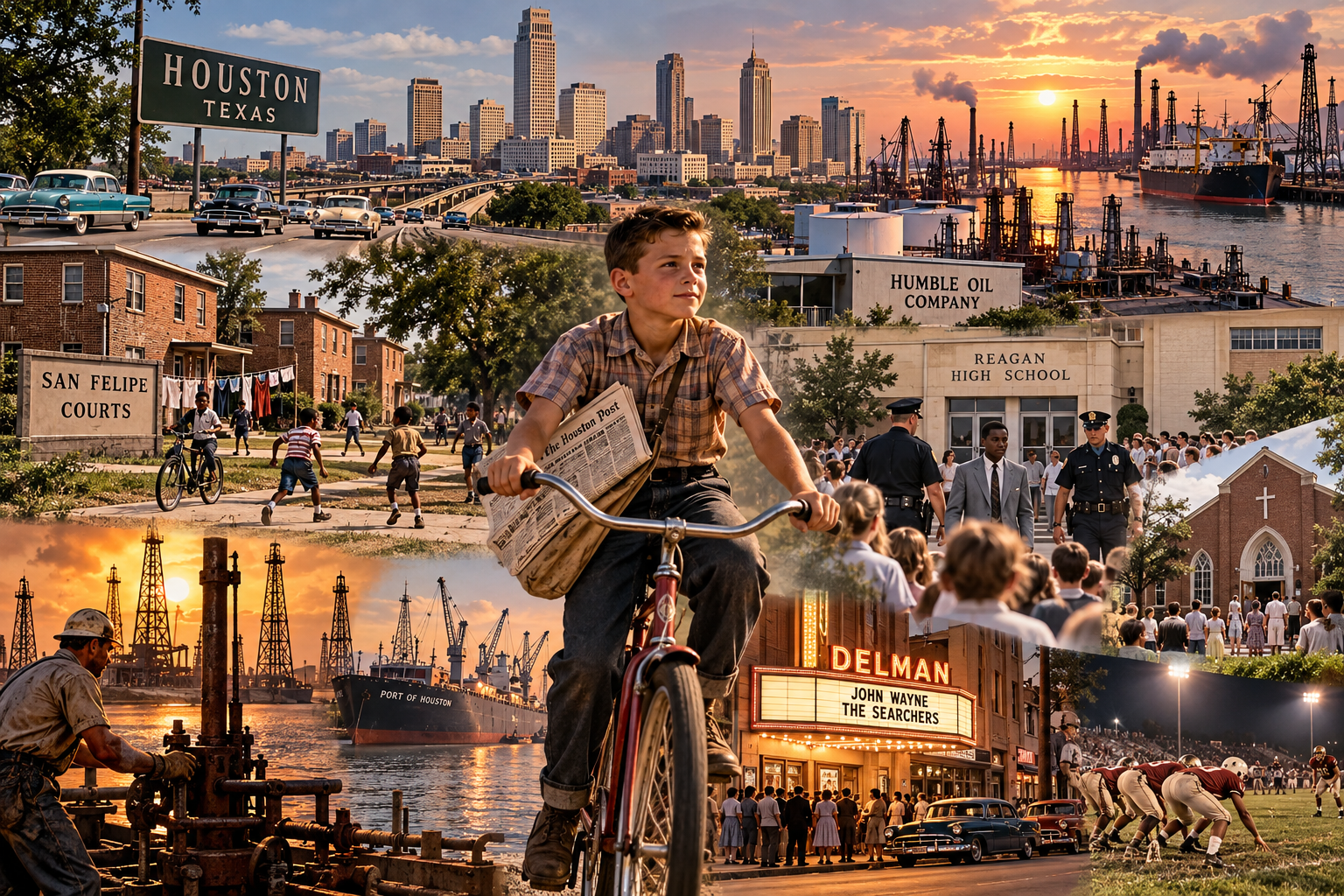
Houston in the ’50s was booming. After WWII, the city exploded thanks to the oil industry, the port, and a postwar economic surge. Skyscrapers were still sparse; the downtown skyline was modest but growing. The Texas Medical Center was just taking shape (founded 1945), but by the ’50s, it was beginning to position Houston as a healthcare hub.
Neighborhoods were sharply divided along race and class lines. Whites often lived in neighborhoods like River Oaks, while African Americans were mostly confined to Third Ward, Fifth Ward, and Sunnyside—areas suffering from redlining and limited city services. Public housing like San Felipe Courts (where my mother and I lived) and Allen Parkway Village were part of the city’s attempt to house war-era and postwar populations, but they often became targets of neglect and controversy.
2. Economy and Industry
Oil was king. The Texas Oil Boom wasn’t new, but in the ’50s, Houston cemented itself as the oil and refining capital. Companies like Humble Oil (which would become Exxon) dominated, and the city’s economy was increasingly tied to energy, shipping, and the emerging space and aerospace sectors.
- Ship Channel: Houston’s Port was expanding, making it the fastest-growing port in the U.S.
- Industry: Alongside oil, petrochemicals and manufacturing were booming, bringing jobs—but also pollution.
3. Race and Segregation
Houston was still very much segregated. Jim Crow laws weren’t just a relic—they were enforced socially, economically, and politically:
- Schools: Separate and unequal. Black schools were overcrowded and underfunded.
- Restaurants, theaters, and public spaces: Segregated. The memory of lynchings and racial violence still lingered from the previous decades.
- Housing: Redlining restricted Black families from buying homes in prosperous areas, forcing them into dense, often underfunded neighborhoods.
- I remember the first Black to inter Reagan High school. The whole school was at the steps to watch as the police escorted him in.
My own upbringing in San Felipe Courts was directly influenced by this. Public housing offered opportunity but also concentrated poverty and exposure to the city’s systemic inequalities.
4. Culture and Daily Life
Despite these divisions, the city had a vibrant culture:
- Italian-American communities: Strong presence, particularly in the Northside, Fifth Ward, and along Galveston Bay. Family-centered, with strong Catholic traditions, cooking, and social life.
- Music: Country, blues, and the early roots of rock ’n’ roll flourished. Local radio and live music venues were hubs for teenagers.
- Sports: High school football was a huge deal—almost a civic obsession in certain neighborhoods.
5. Crime and Vice
Crime was a reality. Houston’s port, oil, and rapid growth attracted gang activity, bootlegging (still fading from Prohibition-era habits), and organized crime. The city had its share of corruption in the police and local government. Crime wasn’t as publicized as today, but petty crime and violence were everyday facts in poorer neighborhoods.
6. Transportation
Houston in the ’50s was car-centric. Freeways were being planned (like the Gulf Freeway, opened in 1948), but traffic was still manageable. Bicycles, like mine, were normal for kids delivering papers or exploring neighborhoods. Public transit existed but was limited, and suburban sprawl was just starting.
7. Natural Disasters
Hurricanes were a seasonal reality. While the big storm surges like the ’37 hurricane were in the past, the 1950s had local flooding issues from heavy rains. Air conditioning was still a luxury in many homes, so summers were brutal.
8. Politics and Social Climate
Houston was a Southern city in transition. Politically, it was conservative, with the Democratic Party dominating locally but leaning conservative on social issues. Civil rights agitation was just starting to rise, though in the city it would take the ’60s for major confrontations. Labor unions were strong in some sectors, especially shipping and oil.
9. Education
Schools were expanding postwar. White kids often had better-funded schools; Black and Mexican-American children got fewer resources. Segregation shaped the social environment dramatically.
10. Everyday Life for Kids
For someone like me
- Bicycles, paper routes, and being outside were the norm.
- Summers were full of exploration, fishing, and community play.
- Indoors, you might experience rationed toys and simpler pleasures, especially in a working-class family.
- Italian-American food, extended family gatherings, and religious observances shaped identity and social life.
Bottom line: Houston in the 1950s was a city of sharp contrasts. Booming wealth and industry existed right alongside poverty, segregation, and violence. It was a place of opportunity if you were in the “right” neighborhood or industry, and a struggle if you were poor or nonwhite. Yet, for kids like me, there was freedom, adventure, and tight-knit communities that defined childhood memories for a lifetime.