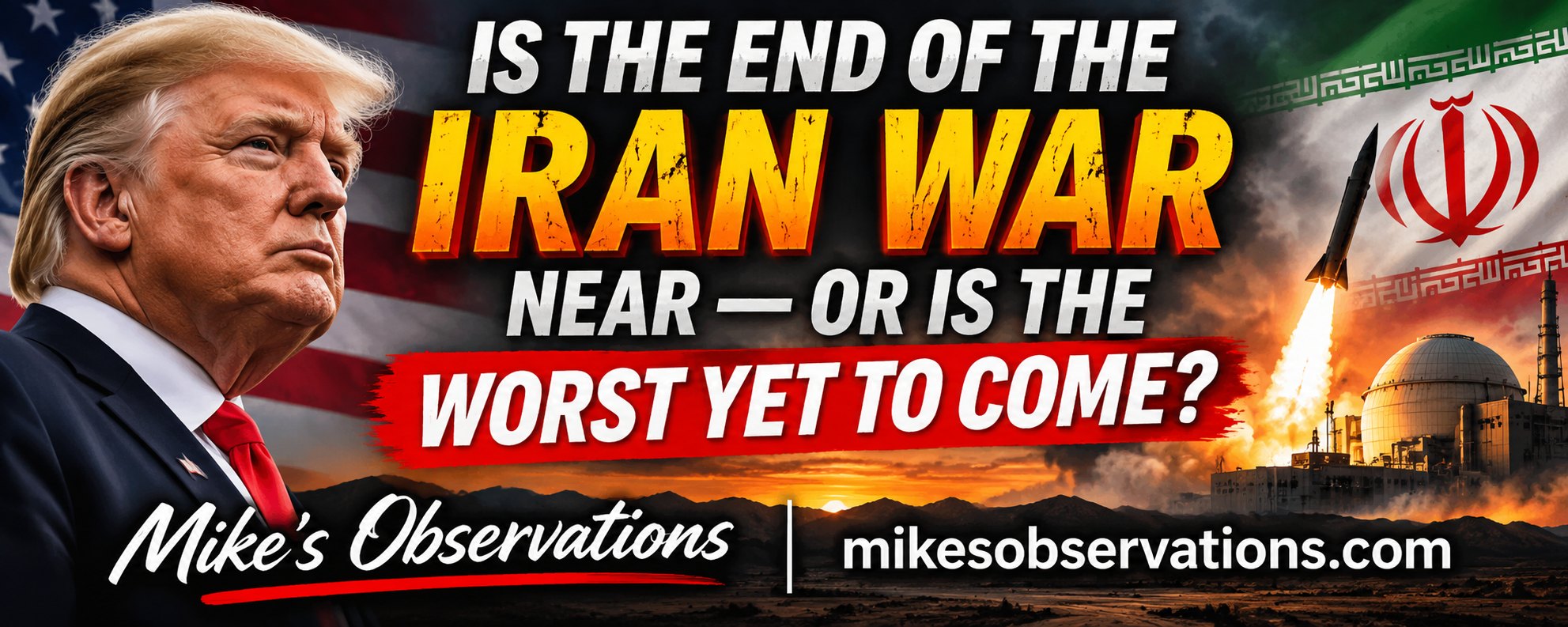
Is the End of the Iran War Near — or Is the Worst Yet to Come?
By Michael Cunningham Sr. | Mike's Observations | November 2, 2026
Could Wednesday, November 4, mark a turning point in America's conflict with Iran? Or are we about to discover that the worst is still ahead?
That's a question I believe millions of Americans are asking.
After months of conflict, threats, military operations, and diplomatic maneuvering, the American people deserve something more than political speeches and vague promises.
They deserve to know where this war is heading.
And perhaps more importantly, they deserve to know what victory is supposed to look like.
The Wednesday Question
Reports have raised the possibility of renewed American military action following Tuesday's midterm elections.
That does not mean an attack has been ordered for Wednesday. Possibility and certainty are two very different things.
But the possibility alone should get our attention.
A major military escalation could change the course of the conflict. It could also trigger retaliation, disrupt energy markets, and place additional American service members in danger.
Anyone who believes another strike would automatically bring peace needs to remember one simple truth: Wars don't always end when one side delivers its biggest blow.
Sometimes that's when the next chapter begins.
Can Diplomacy Still Work?
Diplomatic efforts have continued, and that is encouraging.
But diplomacy must produce more than another agreement that looks good on paper.
If a settlement is reached, Americans should ask whether it provides meaningful safeguards, whether its terms can be verified, and whether it reduces the likelihood of another conflict five or ten years down the road.
Peace is worth pursuing.
But peace without security is little more than a temporary ceasefire waiting to collapse.
I believe America should negotiate from a position of strength. At the same time, strength includes knowing when military force is necessary and when restraint better serves the nation.
Those are not contradictory ideas. They are the responsibilities of serious leadership.
What Would Victory Look Like?
This is the question I wish more people in Washington would answer.
Would victory mean preventing Iran from developing a nuclear weapon?
Would it mean ending attacks against American forces and regional allies?
Would it mean a negotiated settlement with enforceable conditions?
Or would it mean a wider military campaign whose objectives have yet to be clearly explained?
Before any further escalation, Americans deserve a clear understanding of the mission, the risks, and the conditions under which the fighting could end.
Our military is capable of extraordinary things.
I know something about the men and women who wear this country's uniform. They will carry out their orders with courage and dedication.
But their courage should never become an excuse for politicians to avoid difficult questions.
The Price of Another War
Wars are not fought by politicians standing behind microphones.
They are fought by young Americans wearing uniforms.
They are endured by families waiting for phone calls, spouses watching the news, and parents praying their children will come home.
And they are paid for by a nation already facing enormous financial responsibilities.
That doesn't mean America should refuse to defend itself.
Far from it.
It means that when we ask Americans to bear the cost of war, we had better have a compelling reason and a realistic plan.
Is the End Near?
I would like to believe it is.
I would like to believe that the next announcement from Washington will describe a meaningful agreement rather than another round of military operations.
But hope is not a strategy.
The coming days may tell us whether the United States and Iran are moving toward a settlement or preparing for another dangerous confrontation.
Whatever happens, we should judge the outcome by more than headlines, political victories, or dramatic television footage.
We should judge it by whether Americans are safer, whether our service members can come home, and whether the next generation is less likely to inherit this conflict.
At 82 years old, I've watched this country celebrate victories and struggle with the consequences of wars that lasted far longer than anyone expected.
And I've learned something along the way.
Starting a war may require courage. Ending one wisely requires courage, judgment, and a clear understanding of what comes next.
So here's my question to Washington:
What good is winning a war if we cannot secure the peace that follows?
Michael Cunningham Sr.
Mike's Observations — Eight Decades of Faith · Service · Adventure · A Life Well Lived
mikesobservations.com