DIRTY BOMB WARNING: Is America Prepared for the Unthinkable?
By Michael Cunningham Sr. | Mike's Observations
November 16, 2026
America has received another disturbing warning. This time, the reported threat isn't a computer virus, an electrical blackout, or a foreign military maneuver thousands of miles away.
It involves the possibility of a radioactive dirty bomb or chemical weapon being used in the nation's capital.
And while Americans are absorbing that news, the federal government is preparing to test its nationwide Emergency Alert System tomorrow.
Two major developments. One serious question: Is America prepared?
Intelligence Reports Raise the Alarm
On November 16, CNN published an investigation citing seven U.S. officials familiar with intelligence indicating that Iran is developing possible plans to attack senior Trump administration officials in Washington, D.C.
According to the report, intelligence includes potential locations and targets. Federal security officials have reportedly been conducting contingency planning.
Even more disturbing, CNN reported intercepted Iranian communications claiming that bomb-making materials may already be hidden inside the United States.
But that claim has not been independently verified, and intelligence officials reportedly disagree about its credibility.
There is also no public confirmation that Iran has decided to execute such an attack.
The White House says it is monitoring potential threats but that there are currently no credible threats to the homeland.
Those distinctions matter. A responsible investigation must separate a reported possibility from an established fact.
Nevertheless, the allegations are serious enough to demand attention.
What Exactly Is a Dirty Bomb?
A dirty bomb is not an atomic bomb.
It uses conventional explosives to scatter radioactive material. The initial explosion could injure or kill people, while radioactive contamination could complicate emergency response, force evacuations, and require extensive cleanup.
The psychological and economic consequences could also be substantial.
A dirty bomb is designed to create fear, disruption, and uncertainty.
It is precisely the kind of threat that requires effective intelligence, trained emergency responders, and dependable public communications.
Tomorrow, America Tests Its Warning System
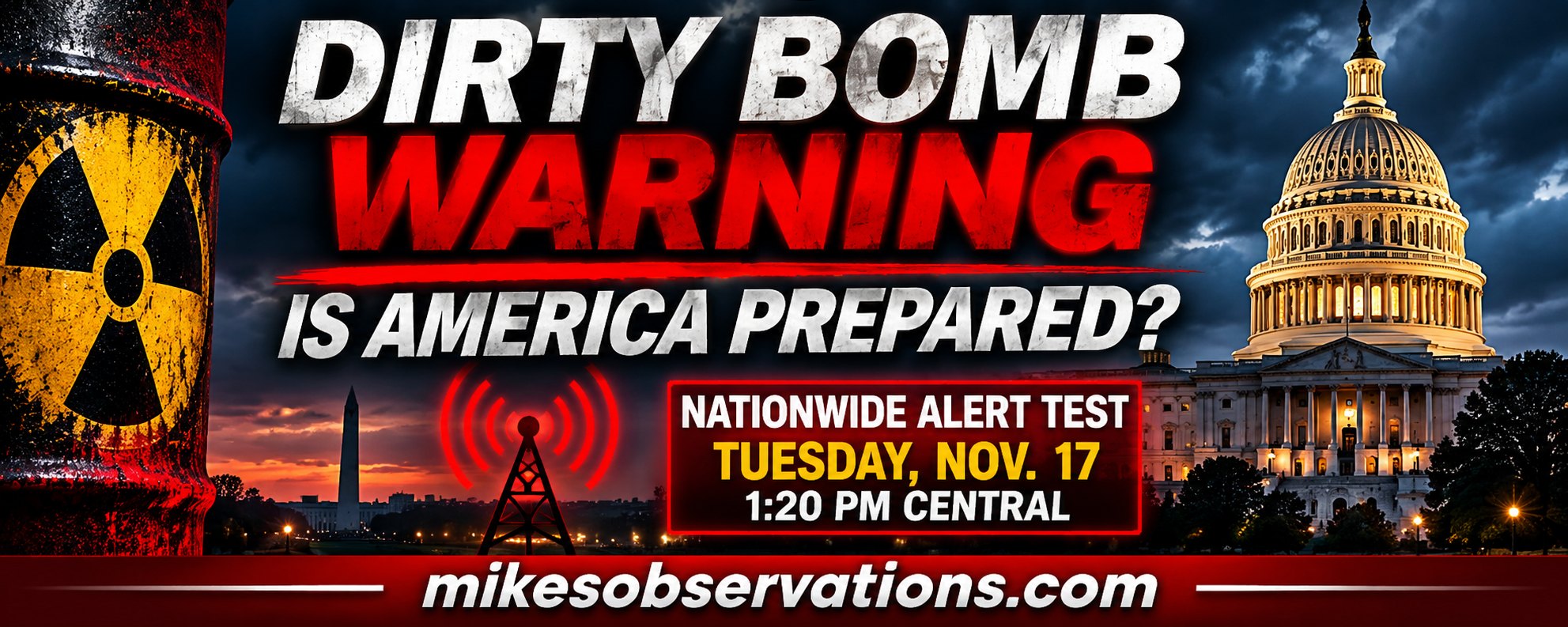
On Tuesday, November 17, at approximately 1:20 p.m. Central Time, FEMA and the Federal Communications Commission are scheduled to conduct a nationwide Emergency Alert System test.
Television and radio programming may be interrupted for approximately one minute.
Cellphones are not included in this particular test.
The government announced the exercise in September, well before the latest intelligence story emerged.
There is no evidence that the test was scheduled because of the reported Iranian threat.
But the timing provides an opportunity to ask an important question:
If a genuine national emergency occurred tomorrow, would the American people receive accurate instructions quickly enough to protect themselves?
That question should matter to every American, regardless of political affiliation.
Our National Security Cannot Depend on Luck
We spend enormous sums defending this nation against threats overseas.
Yet the first responsibility of government remains the protection of American lives here at home.
If intelligence agencies identify possible unconventional attacks, they must have the resources, legal authorities, coordination, and operational readiness necessary to investigate those threats.
That does not mean every intelligence warning should trigger public panic.
It means the government must take credible intelligence seriously, communicate responsibly, and prepare for emergencies before they happen.
The American people deserve to know that radioactive materials are being monitored, potential threats are investigated, and local emergency responders can communicate effectively when seconds count.
Five Questions Washington Must Answer
First, how effectively can federal authorities detect illicit radioactive materials entering or moving within the United States?
Second, are intelligence agencies sharing relevant threat information quickly enough with the agencies responsible for protecting potential targets?
Third, do local emergency responders have the training and equipment needed for radiological emergencies?
Fourth, can our public warning systems continue functioning during a major communications or electrical disruption?
And fifth, will Congress and the administration provide meaningful oversight of these preparedness capabilities rather than waiting until a disaster exposes their weaknesses?
These are not partisan questions.
They are questions of national survival, government accountability, and public safety.
The Difference Between Fear and Preparedness
Americans should not interpret tomorrow's scheduled emergency alert test as proof that an attack is coming.
There is no verified evidence supporting that conclusion.
Nor should the reported intelligence be dismissed simply because no attack has occurred.
We must be capable of holding two ideas at once: an attack is not confirmed, and preparedness is still essential.
The public deserves reliable information, not exaggerated predictions or manufactured panic.
Final Observation
The federal government has one obligation that cannot be postponed, negotiated away, or buried beneath political arguments:
Protect the American people.
The intelligence reports about Iran may never develop into an actual attack. We should certainly hope they do not.
But hope is not an emergency response plan.
Tomorrow's alert test is an opportunity to examine whether the systems intended to warn Americans can perform when needed.
Because the worst time to discover that America's defenses are inadequate is after the first explosion.
America cannot afford to confuse the absence of a confirmed attack with the absence of danger.
Mike's Observations — Independent commentary, investigative reporting, and a commitment to asking the questions Americans deserve answered.
Read more at mikesobservations.com